
 July 14, 2026
You might think that your marketing activity is healthy, but that’s not always the case. Blog posts are published, ad campaigns are live across multiple platforms, the team shows up at industry events, and email sequences fire on time. There’s no shortage of activity, which feels productive. And yet, quarter after quarter, the results aren’t moving the way they should. Leads plateau, pipeline stalls, and growth slows even as the marketing calendar stays full.
When this happens, the instinct is usually to do more: another channel, another campaign, another piece of content. But more activity rarely solves the actual problem, because the problem usually comes down to a lack of strategic alignment – individual tactics running in parallel without a shared direction pulling them toward the same outcome. Your marketing activity needs to be an integrated system, where every channel and every piece of content reinforces the others.
More Activity Doesn’t Equal Better Results
Let’s first understand why “doing more” is so rarely the right fix when it comes to underperforming marketing.
The first reason is the “busy marketer” trap – the tendency to equate visible output with progress. A full content calendar and active campaigns feel like evidence that marketing is working, but neither is connected to a measurable business outcome. This closely relates to the second reason – confusing consistency with effectiveness. Showing up reliably is necessary, but it’s not the entire picture. Consistency without the right strategy underneath it just means underperforming consistently, rather than sporadically.
At the root of both is marketing without direction: tactics chosen because they’re familiar or because a competitor is doing them, rather than because they’re the right lever for the problem the business is actually facing.
Common Reasons Marketing Underperforms
No Clear Positioning
If your business hasn’t clearly defined what makes it different, every other marketing decision becomes harder. Positioning is the foundation; without it, messaging, targeting, and creative all end up working against each other instead of toward the same point.
Inconsistent Messaging
When your website, ads, and sales conversations tell slightly different stories, prospects are left to reconcile the differences themselves, which most of them won’t bother to do. The cost shows up as lower trust and longer, harder sales cycles.
Weak Customer Journey
A prospect’s path from first impression to purchase should feel like one continuous conversation. When there are gaps like a confusing handoff between an ad and a landing page or no clear next step after a content download, momentum is lost at exactly the point it should be building.
Poor Targeting
Even great messaging fails if it’s reaching the wrong audience. Budget spent reaching people who were never going to buy can’t be measured against any meaningful return, no matter how well the creative performs.
Lack of Measurement
Without clear, consistent measurement, it’s impossible to tell which parts of the system are actually working and which are quietly underperforming. Decisions end up being based on instinct rather than evidence, which makes every subsequent fix a guess.
How to Identify the Real Bottleneck
Diagnosing underperformance channel by channel misses the bigger issue if the channels aren’t working together. Marketing should function as an ecosystem, where each channel does a specific job and feeds into the next: ads build awareness, content builds trust, email nurtures interest, and sales closes the loop. When that handoff is designed deliberately, each channel makes the others more effective. This is why isolated tactics rarely compound. A great ad campaign run in isolation might generate clicks, but if the landing page, follow-up sequence, and sales process aren’t built to capture that interest, results stay flat no matter how much is spent. Compounding growth comes from the connections between channels, not any single channel performing well on its own.
Fixing underperforming marketing starts with correctly diagnosing which part of the system is actually broken, because the fix looks different depending on the answer.
An awareness problem looks like low traffic and unfamiliarity when your name comes up in sales conversations – the market simply doesn’t know you exist yet. A lead generation problem looks different: traffic is healthy, but it isn’t converting into inquiries, which usually points to a message or offer that isn’t landing. A conversion problem shows up further down the funnel – leads are coming in but aren’t turning into customers, often due to friction or weak follow-up. And a customer retention problem means the front end is working, but customers aren’t sticking around or buying again, which quietly forces the business to work harder on acquisition just to stay flat.
Build a Marketing System, Not a Collection of Campaigns
Once the real bottleneck is identified, the long-term fix is building marketing as a system rather than a series of disconnected campaigns. Align goals so every channel and campaign works toward the same business objective, rather than each being judged on its own isolated metric. Connect channels deliberately, designing the handoffs so awareness feeds lead generation, and lead generation feeds a sales process built to convert it. Measure continuously so underperformance gets caught early.
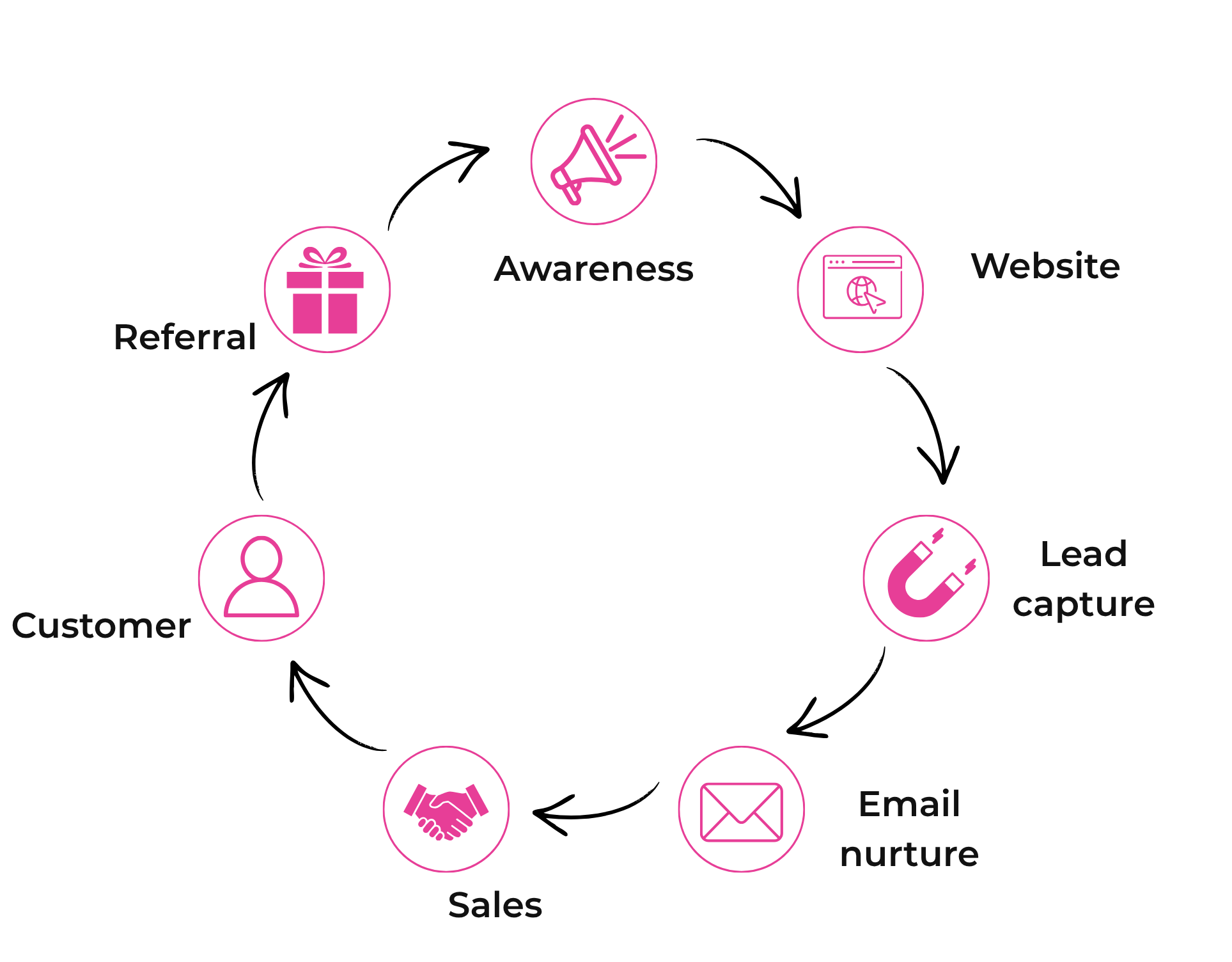
Successful marketing is about ensuring every activity works toward the same business objective, not about doing more of everything at once. If your marketing feels busy but isn’t producing the results it should, get in touch — we can help you identify the real bottleneck and build a compounding system.