
 July 6, 2026
Let’s face it, producing genuinely good content takes real time and real resources. A solid blog post can take days to plan, draft, and edit. A webinar takes weeks of prep, promotion, and follow-up. And yet, for most businesses, that content gets published once, shared a handful of times, and then quietly disappears into an archive, never to be seen again.
That publish-and-forget pattern is one of the most common, and most expensive, habits in content marketing. A single well-built idea shouldn’t live in only one format or on only one channel. Repurposing that content into multiple assets extends its reach to audiences who weren’t there the first time, reinforces your messaging through repetition across channels, and dramatically increases the return on the time you already invested.
Why Content Often Has a Short Shelf Life
The publish-and-forget mindset treats publication as the finish line rather than the starting point. Once a blog goes live or a webinar wraps, attention shifts immediately to the next deliverable, and the asset that took real effort to create gets one push and then silence.
That mindset is compounded by limited distribution. A single LinkedIn post or a single placement on the blog reaches only the slice of your audience paying attention at that exact moment. The result is more and more missed opportunities: ideas that could have supported five or six different marketing efforts instead support one, and the business ends up creating new content from scratch far more often than it actually needs to.
Understanding the Content Repurposing Model
The repurposing model starts from a simple premise: one idea fuels many assets. A single piece of original research, a single client story, or a single strong opinion can be reshaped into a dozen formats, each suited to a different channel and a different stage of attention.
Each additional format adds reach while simultaneously creating compounding visibility. Someone who skims a LinkedIn post one week might watch a short video clip of the same idea the next, and read the full article the week after that. Each touchpoint reinforces the last, and the cumulative effect is far greater than any single piece could achieve alone. Also, because every repurposed asset is rooted in the same core idea, the model reinforces consistent messaging almost automatically, which is another win for your content.
Ways to Repurpose Content
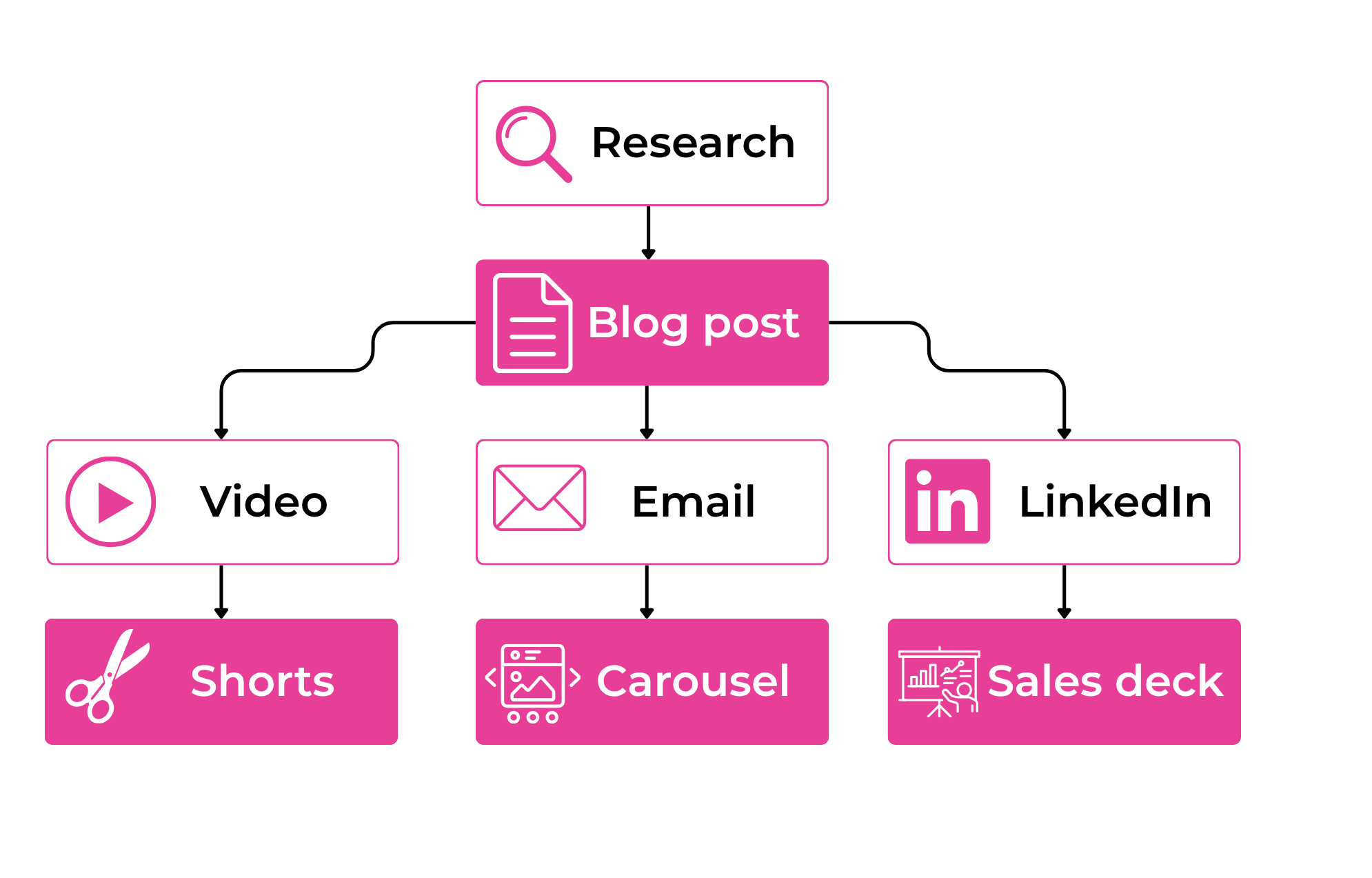
In practice, repurposing works best when it follows natural pathways from one format to another.
- Blogs become LinkedIn posts when you pull out the strongest insight or statistic from a longer article and reframe it as a tighter, more conversational post built for a feed rather than a search engine.
- Webinars become blog articles when you transcribe the discussion and turn the most valuable exchanges into a piece your audience can read at their own pace.
- Customer questions become FAQs when the same inquiries keep showing up in sales calls or support tickets; that repetition is a signal the answer deserves a permanent, findable home.
- Case studies become sales collateral when the results and quotes inside them get distilled into one-pagers or slide decks that the sales team can drop into a deal at exactly the right moment.
- Videos become social clips when a single long-form recording gets cut into short, platform-native moments that each serve as an entry point back into the full piece.
Creating Evergreen Content
Repurposing works best when the underlying content is built to last in the first place, which is where evergreen content comes in. Choosing lasting topics means favoring the questions your audience will still be asking in two or three years over those tied to a specific trend. Evergreen content can be revisited and reused almost indefinitely.
This longevity depends on updating instead of replacing. Instead of retiring an older piece, refresh it: update the statistics, sharpen the examples, republish with a new date. This preserves the SEO value the original built up while keeping it accurate. Over time, this approach naturally produces a content library of foundational pieces that can be mined for repurposed assets again and again.
Building a Sustainable Content Engine
Turning repurposing into a habit requires building it into how content gets planned in the first place. Before a piece of content is even created, you have to decide which other formats it will likely be broken into down the line. A content calendar that maps not just original pieces but their planned repurposed versions keeps that intent from getting lost in day-to-day production. It’s also important to measure performance across every format so that you understand which repurposed assets are actually earning their place, and help you decide what repurposed content to prioritize next.
If your team is creating good content but not getting full mileage out of it, get in touch — we can help you build a repurposing system that turns each idea into many.